


Why the basement smells after a storm, and how to get it fresh again
Heavy rain hits, and two days later the finished basement smells like an old cellar. Here is what is happening inside the carpet, what to do in the first 48 hours, and when a deep clean can fix it.
Free Quote & Same-Day Booking
Free quote, no hidden fees. $20 off when you book online.
Need it today? Call (516) 453-5463 before 2 PM
Short answer: a basement carpet in Queens smells musty after heavy rain because water or damp air got into the carpet and the pad underneath, and it did not dry fast enough. Act within 24 to 48 hours: stop the water, pull out what you can, and get air and a dehumidifier going. If the carpet was wet with clean rainwater and is not moldy, a deep hot water extraction clean plus proper drying can usually bring it back. If it was soaked by sewer backup, or mold has grown into it, it is usually time to replace it, not clean it. Every visit starts with a free quote, and booking online takes $20 off.
Queens is a borough of houses with basements. Many of them are finished: a carpeted playroom, a home office, a guest room, a den with the big TV. When a hard storm comes through, those rooms are the first to feel it. That is why so many calls for carpet cleaning in Queens come in a day or two after heavy rain, and most of them start the same way: “The basement smells, and I do not know where it is coming from.”
This guide explains why basement carpet holds on to a musty smell, where the water usually comes from, what to do after a storm, and how to tell a cleaning job from a replacement job. We keep it honest, including the cases where cleaning is not the right answer.
Why basement carpet turns musty after heavy rain
A basement sits partly or fully below the ground. The concrete floor and walls are in touch with soil that gets wet every time it rains. Even in a dry basement, the slab is cooler than the rooms above, and cool surfaces collect moisture from the air. Add a heavy storm and that moisture has more ways in.
Carpet makes the problem easy to miss. Water that comes in at the edge of a wall or under a door does not sit on top where you can see it. It wicks sideways into the carpet backing and down into the pad. The pad is made to be soft and spongy, which also means it holds water well. From above, the carpet may feel only a little cool or slightly damp. Underneath, the pad can stay wet for days.
That hidden dampness is what you smell. When fibers, backing, pad and the dust trapped in them stay wet, mold and bacteria start to grow, and they give off that heavy, earthy, “old cellar” odor. The EPA lists the underside of carpets and pads among the places where mold can hide, which matches what our crews see: the top of a basement carpet can look fine while the bottom tells a different story.
- The smell is strongest near walls and corners. That is where water usually enters and where air moves the least.
- It gets worse on warm, humid days. Heat and moisture wake the odor up again, even weeks after the rain.
Where the water comes from in a Queens house
Before anyone cleans anything, it helps to know how the water got in. Cleaning a carpet that will get wet again next week is wasted money. These are the most common sources we hear about from homeowners:
- Seepage through walls and floor. Rainwater in the soil pushes against the foundation and finds small cracks and joints. NYC’s Department of Environmental Protection suggests sealing cracks in foundation walls to reduce the risk of flooding.
- Basement doors and window wells. The same DEP flyer notes that below-street-level spaces, such as basement doors, are the most vulnerable to flooding. Outside stairs that lead down to a basement door can turn into a small pool in a cloudburst.
- Sewer backup. In a very heavy storm, water can come up through a floor drain, a basement toilet or a shower. DEP explains that a backwater valve can stop sewer water from backing up into a home through basement plumbing fixtures.
- Plain humidity. Sometimes there is no leak at all. Muggy air settles in a closed basement, the cool slab makes it condense, and the carpet slowly absorbs it.
The difference between clean rainwater and sewer water matters a lot, as you will see below. If you are not sure where the water came from, look at the floor drain, the base of the toilet and the lowest corner of the room. Dirty lines, debris or a sewage smell near a drain point to a backup.
Safety first: if water is standing near outlets, a power strip, the boiler or the electrical panel, do not walk into it. Keep everyone out of the room and get help from an electrician or your utility before you touch anything.
The first 48 hours after the rain
Speed is everything with wet carpet. The EPA says it is important to dry water-damaged areas and items within 24 to 48 hours to prevent mold growth. Here is how to use that window well.
Moving things off the carpet is more important than it sounds. Cardboard boxes, furniture with wood legs, and stacks of magazines all trap water under them and can leave stains or rust marks.
Clean it or replace it? An honest checklist
This is the question every homeowner wants answered, and the answer depends on three things: what kind of water it was, how long the carpet stayed wet, and whether mold has already grown into it. The table below is how we think about it.
| What you see | Usually means | What we recommend |
|---|---|---|
| Clean rainwater, wet for less than two days | The carpet and pad can usually be saved | Deep extraction, then fast drying with air and a dehumidifier |
| Musty smell, carpet feels dry, no visible spots | Old dampness or humidity in the backing and pad | Deep clean plus a plan to keep humidity down |
| Water came up through a drain or toilet | Sewer backup, not clean water | Do not clean and keep it. Call a water damage company to remove it. |
| Black or green spots on the backing or pad | Mold has grown into the materials | Replacement is usually the safer choice |
| Carpet wet for a week or more | The pad is likely ruined even if the top looks fine | Replace the pad at least; the carpet may or may not be saved |
| Small stains along one wall after a light leak | Water lines and tide marks in the fibers | Spot treatment and a full clean of the room |
The EPA is clear that absorbent materials such as carpet may have to be thrown away if they become moldy, because mold can grow into the small spaces inside them. We would rather tell you that on the phone than take your money for a clean that will not last.
The good news: many musty basements we are called to have not reached that point. The water was clean, someone moved fast, and the carpet only needs a real deep clean and a better drying plan. That is the work we do every day in residential carpet cleaning across the city.
A musty smell with no visible water
Some basements never flood, yet the carpet still smells by the end of summer. In those homes the problem is the air. Warm, humid air from outside drifts in, meets the cool walls and slab, and leaves moisture behind. Over weeks, the carpet and pad soak it up.
The EPA recommends keeping indoor humidity below 60 percent, and ideally between 30 and 50 percent, and suggests using air conditioners or dehumidifiers when needed. A humidity meter from a hardware store tells you where your basement stands. If it reads in the high 60s or 70s after a rainy week, the carpet is getting damp whether you see water or not.
- Run a dehumidifier in the basement through the warm, wet months and empty it or connect it to a drain.
- Keep the basement door to the rest of the house closed while it runs, so it dries the basement and not the whole house.
- Check the meter again after every big storm for a few days.
Once the air is under control, a deep clean removes the odor that built up in the fibers. Doing it the other way around, cleaning first and ignoring the humidity, usually means the smell is back in a month. If the odor is strong, ask about our odor removal treatment in the same visit.
Quick smell test: lift a corner of the carpet at the wall where the smell is strongest, if it comes up easily from the tack strip. Press a dry paper towel on the pad. If it comes away damp or the smell is much stronger underneath, the moisture is in the pad, not just the air.
7 mistakes that make basement carpet worse
Each of these can turn a carpet that could be saved into one that has to go.
How our crew deep cleans a musty basement carpet
When the water was clean and the carpet can be saved, a basement clean follows the same careful steps as any room, with extra attention to moisture.
Walk-through and moisture check
We look at the wettest corners, ask where the water came from, and tell you honestly if cleaning will help.
Vacuum and pre-treat
Dry soil and grit come out first. Odor spots and water lines get a pre-treatment so they let go.
Hot water extraction
Heat and strong suction pull dirt, residue and odor out of the fibers, and as much water as possible with it.
Groom and set up drying
We groom the pile and show you where to point fans and how to run the dehumidifier until it is fully dry.
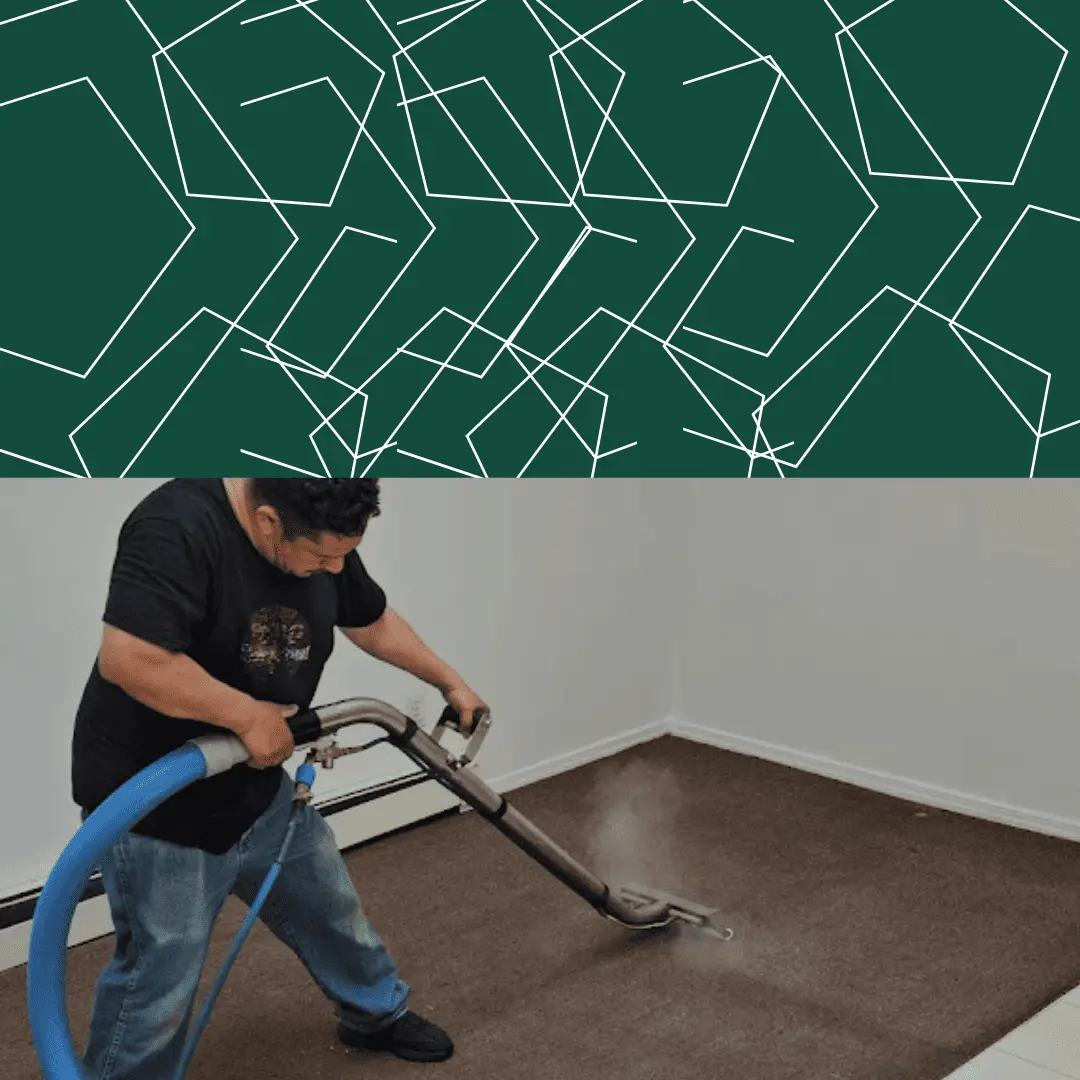
Our steam carpet cleaning uses hot water extraction, which is the right method here because the strong suction is what removes moisture and the dirt that feeds the smell. The products are eco-safe and non-toxic, which matters in a room where kids play on the floor.
Basements usually take longer to dry than rooms upstairs, because the air is cooler and moves less. Upstairs, most carpets we clean are dry in 4 to 6 hours. In a basement, plan for more and keep the fans and dehumidifier on. Our guide on how long carpet takes to dry after steam cleaning covers what speeds it up.
Area rugs and upholstery in a wet basement
Area rugs on a basement floor have their own risks. A rug laid straight on concrete or on top of wall-to-wall carpet gets damp from below, and dyes in some rugs can bleed into the carpet under them when both get wet. If a rug got wet, lift it off the floor right away and let air reach both sides. Do not fold it while it is wet.
Wool and hand-knotted rugs need special care after water. Some can be cleaned in your home, and some are better washed and dried properly so the foundation does not stay damp. Ask about area rug cleaning when you book, and our crew will look at the rug and tell you which way makes sense.
A sofa or chairs that sat in a damp basement can hold the same musty smell. If the frame and cushions only took on humid air, a professional clean can help. If they stood in water, the cushions may be soaked through. Our article on cleaning upholstery after a leak or flood walks through what can be saved.
How to keep the smell from coming back
A deep clean removes the odor that is there today. Keeping it away is about water and air. Most of these steps cost little or nothing.
- Clear the catch basin on your block. DEP notes that litter stuck on catch basin grates can stop stormwater from entering the sewer. Carefully clearing leaves and trash before or during a storm helps. Call 311 to report street flooding or a sewer backup not caused by your home.
- Ask a plumber about a backwater valve if water has ever come up through your floor drain or basement toilet.
- Clean gutters and extend downspouts so roof water lands well away from the foundation.
- Seal small cracks in foundation walls, as DEP suggests.
- Keep humidity in check with a dehumidifier and a meter, as described above.
- Store things on shelves, not on the carpet, and use plastic bins instead of cardboard boxes.
- Plan a yearly deep clean for basement carpet, ideally at the end of summer when the humid months are over.
If your basement carpet has needed cleaning more than once a year because of smells, that is a sign the moisture source is not fixed yet. Our guide to the signs your carpet needs professional cleaning can help you judge timing, but the long-term fix is always keeping water out.
Kids, pets and allergies in a damp basement
Finished basements are often where kids play and where the dog sleeps. That makes a damp carpet more than a smell problem. The EPA notes that breathing in or touching mold or mold spores may cause allergic reactions in sensitive people, and that molds can cause asthma attacks in people with asthma who are allergic to mold.
If anyone in the house has allergies or asthma, keep them out of a basement that smells musty until it is dried and cleaned, and talk to your doctor if symptoms flare. We cover the cleaning side of this in our post on carpet cleaning for NYC allergy sufferers.
For the clean itself, we use non-toxic, eco-safe products that are safe for kids and pets once the carpet is dry. If you want the gentlest option, ask for organic carpet cleaning when you book. Keep pets out of the basement until the carpet is fully dry, both so they do not track dirt into damp fibers and so they do not chew on the fan cords.
Basement homes our crews work in, across Queens and beyond
Houses with finished basements are everywhere in Queens. Our crews work in Bayside, Middle Village and Howard Beach, and in many other Queens neighborhoods where one- and two-family homes are the norm.
The same storms hit the rest of the city too. In Brooklyn, our crews work in house-heavy areas like Canarsie, and in the Bronx in places like Pelham Bay. We also serve houses out on Long Island and up in Westchester.
Wherever you are, the rule is the same as for any job with NYC carpet cleaners who offer same-day service: call or book before 2 PM, and we will do our best to get to you that day, while the damage is still fresh.
Basement carpet smells musty after the rain? Book before 2 PM for same-day service. Free quote on the phone, no hidden fees, and $20 off when you book online.
Basement carpet questions
Why does my basement carpet smell musty after it rains?
Rain raises the moisture in the soil and the air around a basement. Water or damp air gets into the carpet backing and the pad, and if it does not dry within a day or two, mold and bacteria start to grow and cause the musty odor.
Can a musty basement carpet be saved?
Often, yes. If it got wet with clean rainwater, dried within a couple of days and shows no mold, a deep hot water extraction clean and good drying usually remove the smell. Carpet soaked by sewer water or grown through with mold is usually better replaced.
How fast do I need to act after water gets in?
As fast as you can. The EPA advises drying water-damaged areas and items within 24 to 48 hours to prevent mold growth. Remove what is sitting on the carpet, start fans and a dehumidifier, and call early in the day.
Will steam cleaning make a damp basement carpet wetter?
Done properly, hot water extraction removes more water than it puts in, because the strong suction pulls out moisture along with dirt and odor. Home rental machines are weaker, which is why they can leave the pad wetter.
Do you clean carpet after a sewer backup?
No. Sewer water is not a cleaning job. Keep people and pets out of the area and call a water damage company. Once that work is done and new carpet is in, we are happy to help keep it clean.
How long does a basement carpet take to dry after cleaning?
Longer than a room upstairs, because basement air is cooler and moves less. Keep fans running and the dehumidifier on with the door closed until the carpet and pad are fully dry.
How much does basement carpet cleaning cost?
It depends on the size of the area, the carpet type and how much odor or spot treatment is needed. You get a free quote on the phone before we come, with no hidden fees, and $20 off when you book online.
Are your products safe for kids and pets?
Yes. We use non-toxic, eco-safe products. Keep kids and pets off the carpet until it is completely dry.
Get a free quote
Tell us what needs cleaning and when. Book before 2 PM for same-day service.
Prefer to talk? Call (516) 453-5463
Musty basement? Cleaned today.
Book before 2 PM for same-day service. Free quote, no hidden fees, $20 off when you book online.
