
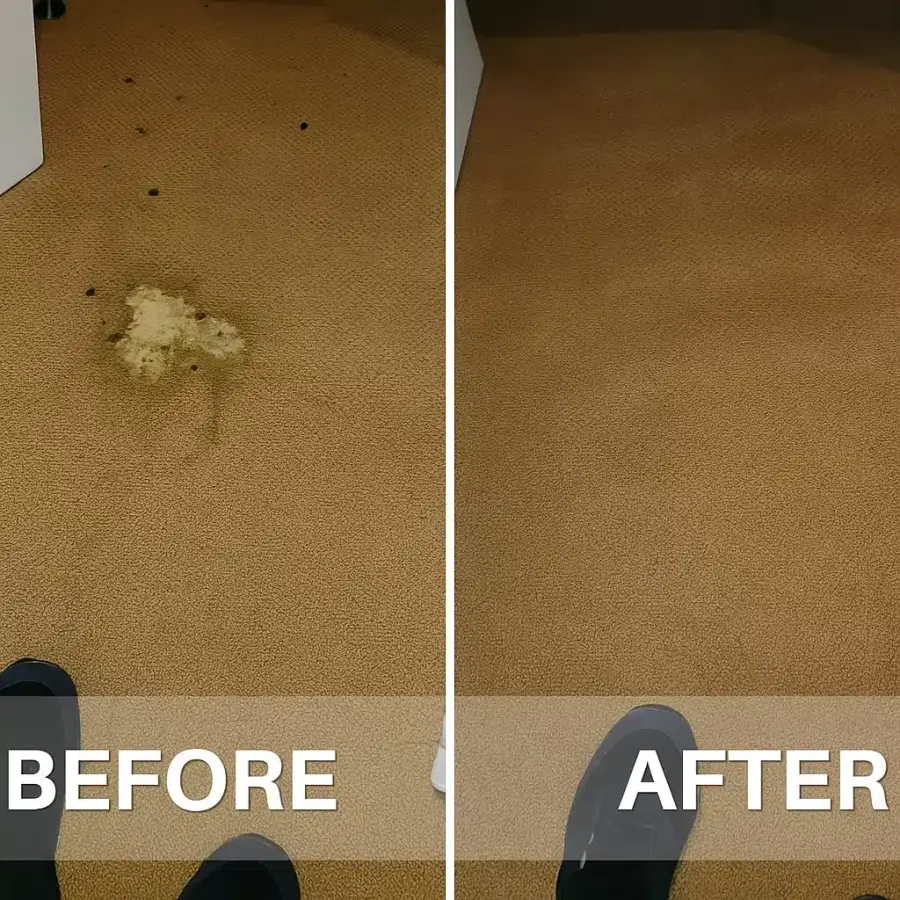
White lines, crunchy fibers and a gray film by the door
Every NYC winter, sidewalk salt and slush ride into apartments on boots, strollers and paws. Here is why salt stains show up on carpet, what to do the day they appear, and how a deep rinse gets them out for good.
By Same Day Carpet Cleaning NY, New York, NY. Updated October 24, 2026. About 14 minutes to read.
Short answer: the white lines and crusty patches you see on carpet in winter are dried sidewalk salt and ice melt. They do not vacuum out, because the salt sits down in the fibers and pulls moisture from the air, so the spot keeps coming back and grabbing dirt. Blot (never scrub) with plain warm water, let it dry and vacuum. If the marks return, the carpet needs a full hot water rinse that flushes the salt out. Book before 2 PM for same-day service, get a free quote first, and save $20 when you book online.
If you live in New York, you know the routine. The first real snow falls, building staff spread ice melt on the stoop, the city salts the streets, and within a week there is a pale tide line on the hall runner and a gray path from the front door to the kitchen. Our crews see it every winter, and it is one of the most common reasons people call us for steam carpet cleaning NYC between December and March.
This guide explains where the salt comes from, how to spot it, what you can safely do at home, and when it is time for a professional rinse. It is written for real city homes: small apartments with one entry, pre-war buildings with radiators, walk-ups and doorman buildings.
Why NYC salt ends up in your carpet
New York takes snow and ice seriously. On a winter operations advisory, the city’s Department of Sanitation said that more than 700 salt spreaders were ready to treat roadways and bike lanes from the first flake. On top of that, property owners have to clear their sidewalks within set hours after the snow stops, and many supers and owners spread ice melt to keep steps from icing over.
All of that salt has to go somewhere. Slush carries it onto crosswalks, and it rides home on boots, stroller wheels and a dog’s paws. A single walk from the subway is enough to bring some of it inside.
Small city apartments make the problem easier to see. Most homes have one entry that opens right onto carpet or an area rug, so every trip lays salt down in the same few steps. In a studio, the first carpet your boots touch takes it all.
- Boots and sneakers. Deep treads hold slush and release it as it melts on the first warm surface they reach.
- Pets. Paws collect salt and grit, and dogs often shake off or lie down right inside the door.
- Shared stairs and halls. In walk-ups and older buildings, every neighbor tracks salt up the same carpeted stairs and landings.
How to tell a salt stain from ordinary dirt
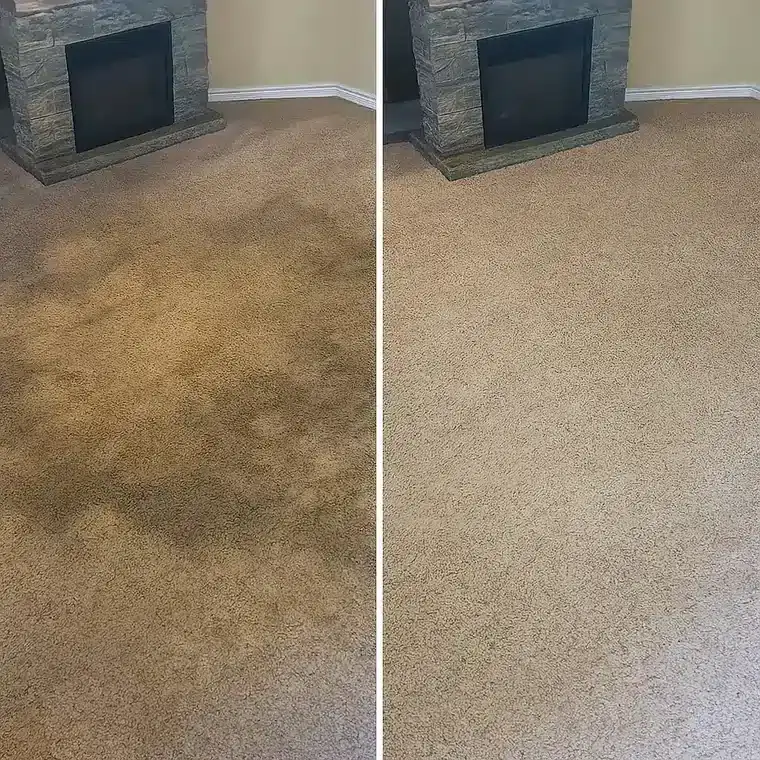
Salt stains are usually lighter than the carpet, not darker. They show up as white or pale gray rings, wavy tide lines, or a crusty patch where wet boots stood. On beige carpet they can hide until the light hits them from the side.
Here are the signs our crews look for during a winter walk-through:
- White edges. As slush dries, the water leaves and the salt stays behind at the edge of the wet area, which makes a ring or a line.
- Stiff, crunchy fibers. Run your hand over the spot. Salt makes fibers feel rough and gritty, almost sandy, even after vacuuming.
- A spot that comes back. You clean it, it looks fine, and a few days later it is visible again. That is a classic sign that salt is still in the base of the pile.
- A damp feel on a humid day. Salty areas can feel slightly cool or damp when the rest of the carpet is dry.
That last sign is worth understanding. Calcium chloride, a common ingredient in ice melt, is known for something chemists call deliquescence. According to Britannica, it is the process where a substance absorbs moisture from the air until it dissolves, and calcium chloride is one of the classic examples. In plain words: salt left in carpet keeps pulling a little water from the air, stays slightly tacky, and holds onto dirt.
Quick test: put a few drops of warm water on the white mark and blot it with a clean white towel. If the mark fades while wet and comes back as it dries, you are looking at salt residue, not a dye stain.
What salt does to carpet and rugs over a winter
One salty boot print will not ruin a carpet. The trouble is the build-up over months.
It wears fibers faster. Every step grinds salt crystals against the fibers, a bit like fine sandpaper. That is why entries often look worn and flat by spring.
It dulls color. The white film makes the carpet look faded and chalky, most of all on dark colors.
It holds dirt. Because the salt stays slightly sticky, it acts like a magnet for soot, sand and street grime. This is how a pale salt line slowly becomes a gray traffic lane.
It can affect what is underneath. When salty slush soaks through to the backing and pad, the salt goes with it, to a layer that surface cleaning never reaches.
Wool rugs by the door hold a lot of water, and salt that dries inside a thick wool pile is hard to get out with home tools.
What to do the day salt gets on your carpet
The best time to deal with salt is before it dries. You only need towels, warm water and a little patience.
- Take boots off at the door. Stop more salt from going down while you work. Put wet boots on a tray or old towel, not on the carpet.
- Blot with plain warm water. Dampen a clean white towel with warm water and press it on the spot. Lift, turn the towel to a clean part and press again. Work from the outside of the mark toward the middle so you do not spread it.
- Do not soak the carpet. A little water dissolves the salt. Too much pushes it down into the backing and pad, where it is harder to remove.
- Press dry. Lay a dry towel over the area and stand on it for a minute to pull up as much water as you can.
- Let it dry with airflow. Crack a window, run a fan, or point a box fan across the floor. Radiator heat helps, but fresh air helps more.
- Vacuum once it is fully dry. This lifts any loose crystals that came up to the surface as the spot dried.
Many people also use a mild mix of warm water with a small splash of white vinegar for older salt marks. If you try it, test a hidden corner first, use very little liquid, and skip it on wool, silk or antique rugs unless a professional has said it is safe for that rug. When in doubt, plain water is the safer choice.
Keep a salt kit by the door: two old white towels, a small spray bottle of plain water and a boot tray. Thirty seconds of blotting the same evening saves a lot of work later in the season.
Mistakes that make salt stains worse
Most salt damage we see is not caused by the salt alone. It is caused by what happens next. These are the habits that turn a light white mark into a stubborn problem.
Soap is the mistake we see most. Even a little dish soap left behind leaves a sticky film that catches the next round of salt, so the spot comes back darker. If you already used soap, just mention it when you book.
Home blotting vs professional cleaning
Home care is great for fresh marks. But a towel only lifts what is near the surface, and rental machines often leave water and soap behind. Here is an honest side-by-side look.
| Question | Home blotting and rental machines | Professional hot water extraction |
|---|---|---|
| Fresh salt marks | Works well if you act the same day | Works well, usually not needed for one small fresh spot |
| Old, crusty salt lines | Often fade, then come back as they dry | Rinses salt out of the whole fiber, base to tip |
| Salt in the pad | Hard to reach without soaking the carpet | Strong suction pulls water and dissolved salt back out |
| Gray traffic lanes | Little change with towels and sprays | Pre-treatment plus extraction lifts most lanes |
| Residue left behind | Soap and salt film are common | Clean rinse with no sticky film |
| Drying time | Can stay damp for a long time with rental machines | Most carpets dry in 4 to 6 hours with airflow |
| Wool and delicate rugs | Risky without knowing the fiber | Fiber is checked first and the method matches it |
Cleaning professionals know that salt residue is tricky. An equipment maker’s technical tip on ice melt residue notes that ice melt usually contains calcium chloride-type ingredients, and that a standard prespray followed by the wrong rinse can leave a gummy, sticky residue on carpet fibers. The answer is a careful pre-treatment and a thorough rinse, not more soap.
Stopping salt at the door
You cannot keep salt off New York sidewalks, but you can keep most of it off your carpet.
- Use two mats. A rough outdoor mat outside the door scrapes off grit. A soft, absorbent mat inside catches the water. Shake and wash them often.
- Add a boot tray. A plastic tray with a lip holds melting slush so the water and salt do not reach the carpet.
- Wipe stroller and cart wheels. Keep an old towel on a hook by the door for wheels and paws.
- Move the nice rug. If your best wool or vintage rug sits by the entry, swap it for a washable runner until spring.
- Vacuum the entry more often. Two or three quick passes a week lift dry crystals before they grind into the pile.
If you have carpeted stairs in a brownstone or a two-family house, the stairs are the entry. Salt from the stoop lands on the lowest treads first and climbs from there. Our guide to brownstone stair runner cleaning covers how stair carpet is cleaned without soaking the wood below.
Walk-ups, lobbies and doorman buildings
In walk-ups, the shared hall and stair carpet takes salt from every tenant. In doorman buildings, the lobby mat catches a lot, but wet shoes still carry salty water into each unit.
Our crews work in all of these buildings across Manhattan, Brooklyn and Queens, from pre-war walk-ups in the West Village to elevator buildings in Chelsea. If your building needs paperwork or a booked service elevator before contractors can come up, tell us when you book. Our article on co-op and doorman building carpet cleaning explains what most buildings ask for.
Hall carpet, lobby runners and office entries take salt from many people a day. For those spaces, commercial carpet cleaning can be scheduled early or after hours, so the hall is clean and dry before the morning rush.
Radiators add a twist. Pre-war apartments often run hot, which dries salty spots fast and leaves the crystals at the fiber tips, where they show the most.
Dogs, paws and winter salt
Winter walks mean salty paws. Dogs bring salt in on their feet and belly, then lie down on their favorite rug to dry off.
The ASPCA’s cold weather safety tips advise washing and drying your pet’s feet and stomach after each walk to remove ice, salt and chemicals. That habit protects your dog, and it also protects your carpet. A towel and a shallow bowl of warm water by the door take a minute and stop most salt before it reaches the floor.
Pet homes often have two winter problems at once: salt from outside and the usual accidents inside. Both leave residue in the carpet that a towel cannot fully reach. If you are dealing with both, our pet stain removal treats the spot down at the backing, not just the surface. We use non-toxic, eco-safe products, so the carpet is safe for pets and kids once it is dry.
For pet owners: keep your dog off freshly cleaned carpet until it is fully dry. Close a door or use a gate for those few hours, and give them a towel or their own bed in another room.
Area rugs by the door need extra care
Many NYC entries have an area rug instead of wall-to-wall carpet. Wool and cotton soak up salty water, hand-knotted rugs can have dyes that move if cleaned the wrong way, and a damp rug can mark the wood under it.
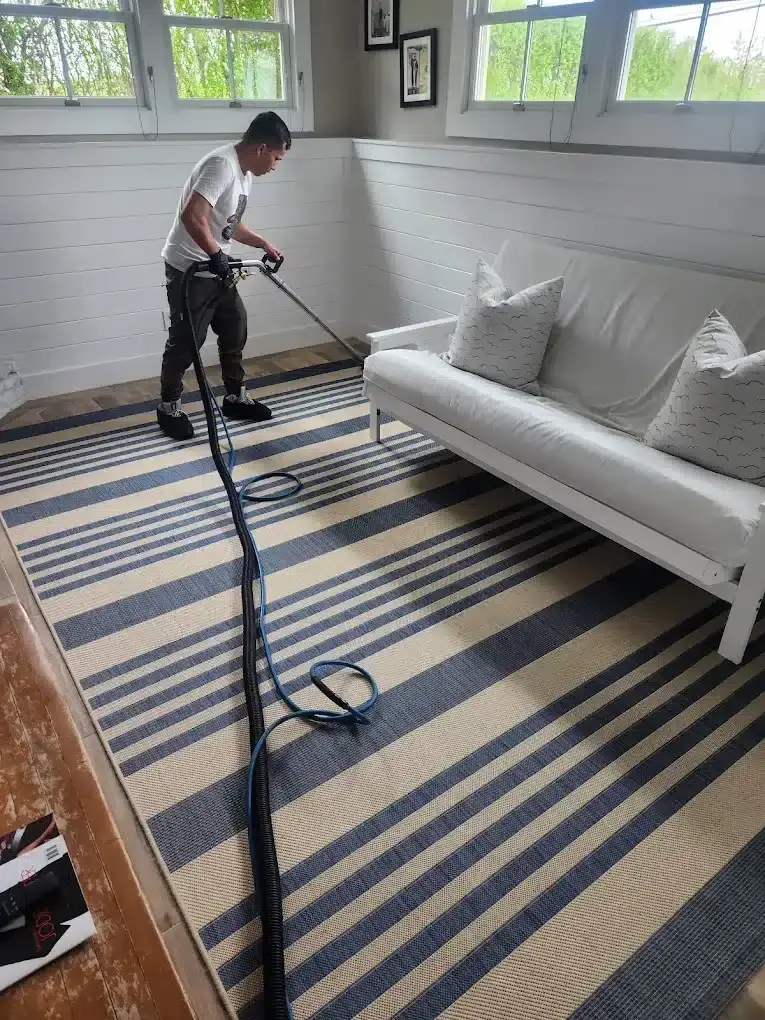
For a washable synthetic runner, blotting and a gentle rinse at home may be enough. For wool, vintage or hand-made rugs, it is safer to let a professional handle salt that has built up over a season. Our area rug cleaning starts by checking the fiber and the dyes, so the method fits the rug rather than the other way around.
Lift the rug now and then. If you see white powder on the wood, salt is passing through; sweep it up and let the floor dry.
How our crew removes salt residue, step by step
A winter clean is our full service with extra attention where salt hides. With more than 20 years of experience, our crews know where to look: entries, hall runners and the first few stairs.
Walk-through and fiber check
We look at every salt line and stain, check the fiber, and ask what you have already used on it.
Dry vacuum first
Loose salt crystals and grit come out before any water goes down, so they are not turned into slurry.
Pre-treat salt and lanes
Salt lines and traffic lanes get a pre-treatment chosen to loosen salt without leaving a sticky film.
Hot water extraction
Hot water rinses through the fibers and strong suction pulls the water and dissolved salt back out.
Extra rinse where needed
Heavy entry areas get another rinse pass so salt is not left at the base of the pile.
Groom and set airflow
The pile is groomed so it dries evenly, and we suggest the best way to move air through the room.
Every job starts with a free quote, with no hidden fees, and the price is confirmed before we start. Booking online takes $20 off. For homes that want a full winter refresh, our residential carpet cleaning covers every room, not just the entry.
When to book a winter salt cleaning
There is no single right date, but this rhythm works for most NYC homes.
If you are hosting for the holidays or moving out, a same-day visit can get the salt out in time. Book before 2 PM and we can usually come that same day. Our guide to same-day carpet cleaning explains how a visit works hour by hour.
Most carpets dry in 4 to 6 hours with good airflow, and dry winter air with the heat on often helps.
Our crews work across the city and beyond, from Ditmas Park and Bay Ridge in Brooklyn to Sunnyside in Queens, plus the Bronx, Long Island and Westchester. Wherever you are, if winter salt has left its mark, our same day carpet cleaning in NYC can rinse it out and leave the carpet soft again.
Salt lines that keep coming back? Book before 2 PM for same-day service. Free quote on the phone, no hidden fees, and $20 off when you book online.
Every winter clean includes
- Free quote before we come
- Walk-through and fiber check
- Dry vacuum to lift salt crystals
- Pre-treatment for salt lines
- Hot water extraction rinse
- Grooming for even drying
Winter salt stain cleaning
Book before 2 PM and we come today. Free quote, no hidden fees.
- $20 off when you book online
- Eco-safe, kid and pet safe
- Manhattan, Brooklyn, Queens, Bronx
Salt stain questions
Why do salt stains come back after I clean them?
Blotting lifts salt near the top, but salt deeper in the pile wicks up as the carpet dries and shows again. A hot water rinse with strong suction removes it from the whole fiber.
Can I just vacuum the white marks away?
Vacuuming helps once the spot is dry, but dried salt clings to the fibers. Blot with warm water first, let it dry, then vacuum.
Is winter salt bad for my carpet?
A little salt cleaned up quickly does no harm. Salt left all winter wears the fibers, dulls the color and holds dirt, which turns entries and hallways gray.
Should I use vinegar on salt stains?
Many people use a little white vinegar in warm water on older marks. Test a hidden spot first, use very little liquid and skip it on wool, silk or antique rugs. Plain water is the safer start.
Can you clean salt stains the same day?
Usually, yes. Book before 2 PM and we can usually come that day across Manhattan, Brooklyn, Queens and the Bronx.
How much does salt stain cleaning cost?
It depends on the rooms, the carpet and how much salt has built up. You get a free quote before we come, with no hidden fees, and $20 off when you book online.
Is it safe for kids and pets?
Yes. We use non-toxic, eco-safe products. Keep kids and pets off the carpet until it is dry, usually 4 to 6 hours.
Should I wait until spring to clean?
If marks are light, a spring clean is fine. If salt lines keep coming back or lanes are going gray, a mid-winter rinse stops the wear from building.
- Soot lines on carpet in NYC: why radiators cause themWhy gray lines form along walls and under doors, and how they come out.
- Bronx carpet cleaning: what to know before you bookBuilding rules, radiators, drying and getting an accurate free quote.
- Signs your carpet needs professional cleaningHow to tell when vacuuming is no longer enough.
- 5 common carpet cleaning mistakes NYC homeowners makeSimple habits that keep carpet cleaner for longer.
More on the blog, or read our carpet cleaning FAQs.