
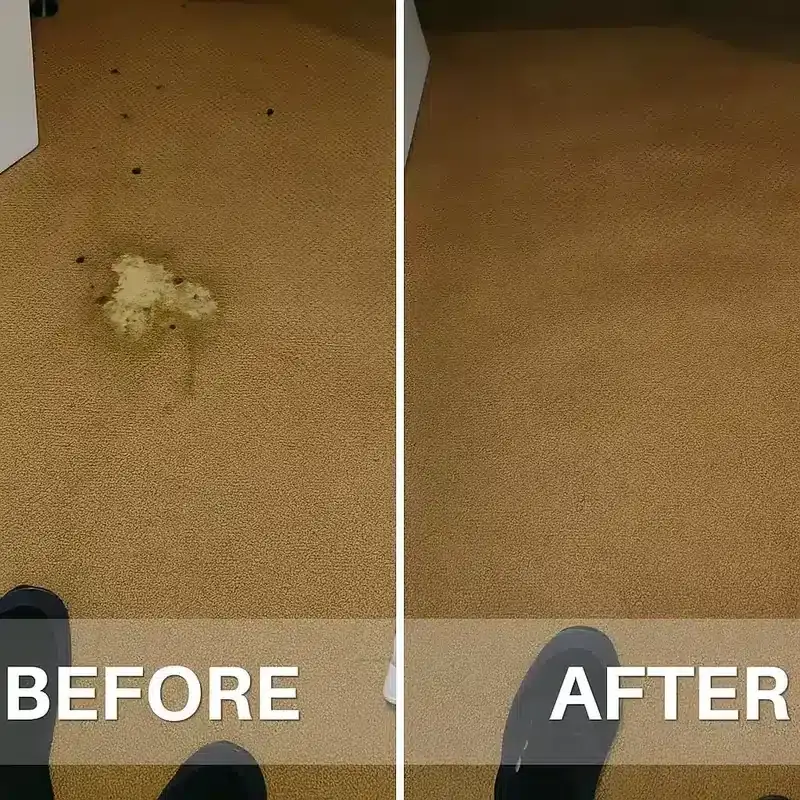
Why gray lines form along walls and under doors, and how they come out
The radiators come on in October, and by mid-winter a dark gray line has crept along the baseboards. It is not paint, and it is not mold. Here is what those soot lines are, why pre-war apartments get them, and what really removes them.
By Same Day Carpet Cleaning NY, New York, NY. Updated October 25, 2026. About 14 minutes to read.
What soot lines on carpet really are
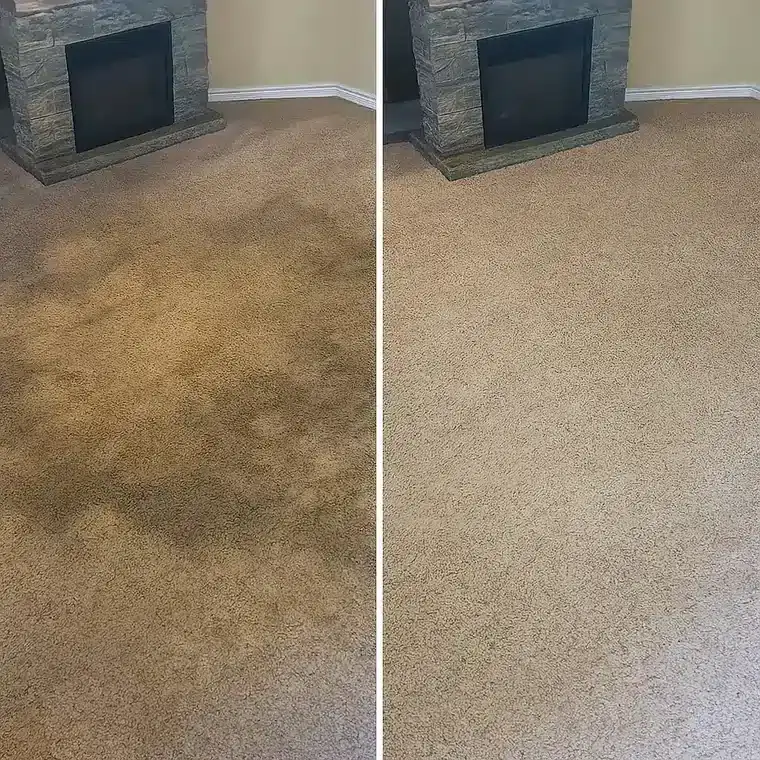
The trade name is filtration soiling. You may also hear it called filtration lines, soot lines or ghost lines. They look like someone drew along the edges of the room with a gray pencil. The line is usually sharp on the wall side and fades out toward the middle of the room.
Here is the simple version of what happens. Air in a room is always moving. When it moves through a narrow gap, like the space between the bottom of a baseboard and the carpet, or the space under a closed door, it passes through the carpet fibers on the way. The fibers act like a filter. Tiny particles in the air get caught and stay behind, and over months they build up into a visible line.
A 2018 home-care feature in Creators Syndicate describes it the same way: filtration soiling comes from airborne pollutants passing through the carpet, and forms along the crack between the carpet and the baseboard or under a closed door. The particles include soot, smoke from candles and fireplaces, and cooking smoke.
That is why the lines are so stubborn. They are not a spill sitting on top of the pile. They are very fine, oily particles worked deep into the fibers, often right down at the base where the carpet is tacked to the edge of the room.
Why pre-war NYC apartments get them so often
Filtration lines can show up in any home, but they are especially common in older city apartments. A few things work together:
- Radiators run for months. In New York City, heat season runs from October 1st to May 31st. Warm air rising off a radiator keeps the air in the room moving day and night, and moving air is what carries particles to the carpet edges.
- Old buildings have gaps. Floors settle, baseboards shrink, and there is often a small space under the trim or where the carpet meets the wall. Air finds those gaps.
- Doors stay closed. Bedrooms and closets in small apartments are often kept shut for privacy or to hold heat. The narrow gap under the door becomes a busy air path, and the carpet under it turns gray.
- City air carries soot. Traffic, building boilers and cooking all add fine particles to the air. Columnist Mary Hunt lists kitchen grease, smog and auto emissions among the sources of filtration soil, along with soot and candle smoke.
- Windows open in winter. Steam heat can make apartments very warm, so many New Yorkers crack a window. That pulls in street air and creates even more air movement across the room.
None of this means your home is dirty. Some of the cleanest apartments we see have the darkest lines, simply because the carpet is light-colored and the building has strong heat. A beige or cream carpet shows every bit of it.
Quick check: lift the edge of a doormat or a small rug that has been sitting near the wall. If the carpet under it is clean but the strip beside it is gray, you are almost certainly looking at filtration soiling, not a stain from something spilled.
Where the lines show up in a NYC apartment
Once you know what to look for, you will see the same pattern in most older apartments. These are the spots our crews check first:
You may also find faint lines along the edges of furniture that sits a little off the floor, like a dresser on short legs or a radiator bench.
Soot line or something else? How to tell
Not every dark mark near a wall is filtration soiling. Before you scrub, it helps to know what you are dealing with, because the right fix is different for each.
| What you see | Likely cause | Filtration soot line |
|---|---|---|
| Shape | Spills are blotchy; traffic lanes follow walking paths | Thin, straight line that follows the wall or door edge |
| Location | Middle of the room, hallways, in front of the sofa | Room edges, under doors, next to radiators |
| Smell | Musty or sour can mean moisture or pet urine | Usually no smell at all |
| Feel | Sticky or crunchy points to a spill residue | Feels like normal carpet |
| Growth | Appears at once after an event | Builds slowly, darkest after winter |
| What fixes it | Spot treatment, odor treatment or drying | Pre-treatment, edge agitation and hot water extraction |
If a dark area near a wall smells musty, feels damp, or sits under a window that leaks, treat it as a moisture problem first. That is a job for your super or landlord before it is a job for a carpet cleaner. If it smells like urine, our odor removal service treats the source rather than just the surface.
What you can safely try at home
You can sometimes lighten a fresh, faint line on your own. Very dark, older lines rarely come out with home tools, but a careful first attempt will not hurt if you keep it gentle. The 2018 Creators guide suggests a crevice-tool vacuum, a short dwell time with a cleaning product, a stiff brush and a thorough rinse. Here is a safe way to do that in an apartment:
- Vacuum the edge slowly with the crevice tool, pressing it right into the gap at the baseboard. Go over the line several times from different angles.
- Test first. Try any product on a hidden spot, like inside a closet, and blot with a white towel to check for color transfer.
- Use very little liquid. Mist lightly. Do not pour. Wet carpet edges dry slowly, and too much water can soak the tack strip and the pad.
- Brush along the line, not across the room. A small, soft-to-medium brush helps loosen the particles.
- Rinse and blot. Blot with clean water and a white towel until no more gray comes up. Leftover cleaner attracts new dirt.
- Dry it fast. Point a fan at the edge and leave the door open until it is fully dry.
If the line only gets a little lighter after one careful try, stop there. Scrubbing harder or adding more product usually makes the problem worse, not better.
Be careful near radiators: do not put wet towels or spray bottles on a hot radiator or valve, and keep cleaning products away from the heat. Let the area cool, or work on that side of the room when the heat is off.
7 mistakes that make soot lines worse
We see the results of these every winter. Each one either sets the soot deeper or damages the carpet edge.
How our crew removes soot lines, step by step
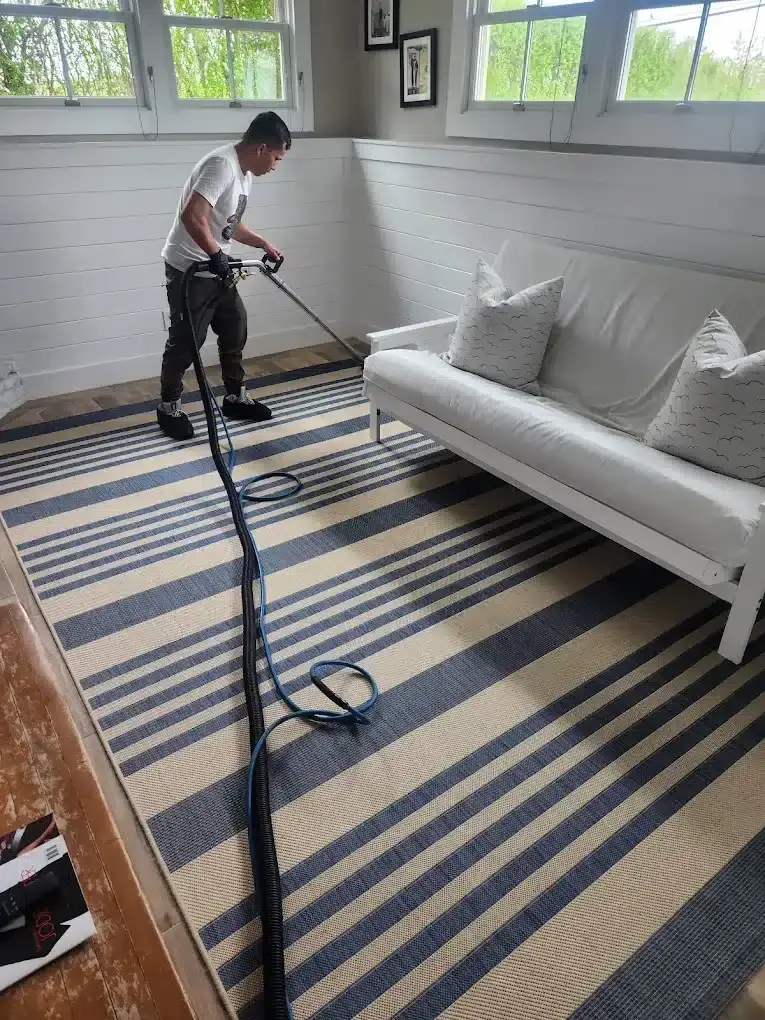
Soot lines need more than a normal pass of the wand. The work is slow and close to the wall, and it happens before and after the main clean of the room. Here is how our crews handle it:
Walk-through and fiber check
We look at every edge, confirm it is filtration soiling and not moisture, and check the carpet fiber and color.
Dry soil removal at the edge
The edges are vacuumed close to the wall so loose particles come out before anything gets wet.
Edge pre-treatment
A pre-treatment made for oily soil goes on the lines and is given time to work, then brushed in by hand.
Hot water extraction
Heat and strong suction pull the loosened soot out, with extra passes along each line and under each door.
Second look and spot work
After the first pass we check each line in good light and repeat where it still shows.
Groom and dry
The pile is groomed so the edges dry evenly. Most carpets are dry in 4 to 6 hours with a window open or a fan on.
Because the edges are part of the whole room, it makes sense to clean the entire carpet at the same time. A clean edge next to a gray middle looks odd, and the main traffic lanes usually need attention after a long winter too. Our residential carpet cleaning covers bedrooms, living rooms, hallways and stairs in one visit.
What one visit can fix, and what takes longer
We want you to know what to expect before the machine is turned on. Filtration lines are among the harder things we remove, and results depend on the carpet and how long the soot has been there.
- Light, recent lines from one or two winters usually come out well in a single visit.
- Dark lines from many years often lighten a lot, but a faint shadow can remain. Over time, soot can stain the fiber itself, not just sit on it.
- Nylon and polyester carpet usually responds well to pre-treatment and hot water extraction.
- Wool carpet needs gentler products and lower heat, so it may take more passes. The crew will tell you during the walk-through.
- Lines where the carpet has been bleached or sun-faded cannot be fixed with cleaning, because the color itself is gone.
If a line is stubborn, our stain removal team can do extra spot work on it. If it is a mix of soot and something else, like an old pet spot near a door, the crew will treat each one on its own terms.
How to keep the lines from coming back
You cannot change how your building’s heat works, but you can slow down how fast the lines return. Most of these cost nothing:
- Vacuum the edges, not just the middle. Once a week in winter, run the crevice tool along the baseboards and under doors. It removes soot before it settles in.
- Go easy on candles. Burning candles adds soot to the air. The Creators guide suggests flameless LED candles as an easy swap.
- Run the range hood when you cook. And clean its filter regularly. In a small apartment, kitchen smoke reaches every room.
- Leave interior doors open when you can. A door left open moves air through a wide opening instead of a narrow gap under the door.
- Keep radiator covers and the floor near them dusted. Dust on a hot radiator goes straight into the air.
- Seal small gaps. Ask your super about gaps under baseboards or around pipes. Closing them cuts down the air flow through the carpet edge.
- Plan a cleaning at the end of heat season. A clean in late spring removes the winter’s soot before it has another year to set.
Cleaner air indoors helps more than the carpet. If someone in your home has allergies, our guide on whether professional carpet cleaning helps NYC allergy sufferers covers what cleaning can and cannot do for dust and allergens.
Soot lines in rentals, co-ops and walk-ups
Building type changes how you plan the job, and sometimes who pays for it.
Rentals and move-outs. Gray edges are one of the first things people notice at a walk-through. If you are moving out at the end of winter, book the clean a day or two before the inspection so the edges are dry and bright. Clean, dry carpet makes the whole apartment look cared for.
Co-ops and doorman buildings. Many have rules about contractor hours, the service elevator and paperwork. Ask your management office early, and tell us your building type when you book, so a same-day slot does not get stuck in the lobby.
Walk-ups and brownstones. Stairs and landings get filtration lines along the wall on every step. Our crews clean them tread by tread, with controlled moisture so the wood under the stair carpet stays dry.
Homes with kids and pets. Little ones and pets spend a lot of time on the floor, often right along the walls where toys and beds end up. Ask for our organic carpet cleaning, which uses non-toxic, eco-safe products. Keep kids and pets off the carpet until it is dry.
When to book: before, during or after heat season?
There is no wrong time to remove soot lines, but timing changes how long the result lasts.
- Early fall (before the heat comes on): a good time for a clean start. Lines will form again over the winter, but they start from zero.
- Mid-winter: best if guests are coming, you are moving, or the lines bother you now. Dry winter air with radiators running often helps carpet dry quickly, as long as some fresh air gets in.
- Late spring (after May 31): the best time for a deep clean. It removes a full season of soot and salt before summer humidity.
Winter often brings a second problem along with the lines: white salt marks from the sidewalk tracked in on boots. If you see both, our guide on salt stains on carpet in NYC winters explains how those are treated, and the crew can handle both in the same visit.
Where our crews remove soot lines across NYC
Pre-war buildings with steam heat are everywhere in the city, so our crews see filtration lines in every borough. In Manhattan, our crews work in older buildings in Morningside Heights and Inwood. In Brooklyn, we work in walk-ups and row houses in Greenpoint and Clinton Hill. In Queens, the apartment buildings of Kew Gardens have the same radiators and the same gray edges. And in the Bronx, our crews work in the large pre-war buildings around Bedford Park.
Wherever you are, the rule for carpet cleaning NYC homes is the same: call or book before 2 PM and we will do our best to come today. You get a free quote first, with no hidden fees, and the price is confirmed before we start.
Gray lines along your walls? Book before 2 PM for same-day service. Free quote on the phone, no hidden fees, and $20 off when you book online.
Every soot-line visit includes
- Free quote before we come
- Walk-through and edge check
- Close vacuuming at the walls
- Edge pre-treatment and brushing
- Hot water extraction
- Grooming for even drying
Soot line removal
Book before 2 PM and we come today. Free quote, no hidden fees.
- $20 off when you book online
- Eco-safe, kid- and pet-safe products
- Manhattan, Brooklyn, Queens, Bronx
Soot lines on carpet: questions
They are called filtration soiling. Air moves through the gap between the carpet and the wall, or under a closed door, and the carpet traps soot, smoke and fine dust from that air. Over months, it builds into a gray or black line.
Usually not. Soot lines are dry, have no smell and follow the wall or door edge in a straight line. A dark area that smells musty or feels damp may be a moisture problem, and should be checked by your super or landlord first.
In NYC, heat season runs from October 1 to May 31. Radiators keep the air moving all winter, and moving air carries more particles to the carpet edges. Candles and cooking with the windows closed add more soot.
No. Vacuuming the edges with a crevice tool helps slow them down, but the soot is fine and oily and sits deep in the fibers. It needs a pre-treatment, brushing and hot water extraction.
Light, recent lines usually come out well in one visit. Very old, dark lines often lighten a lot but may leave a faint shadow, because the soot can stain the fiber itself. The crew will tell you what to expect during the walk-through.
It depends on the rooms, the carpet type and how many edges need extra work. You get a free quote on the phone before we come, with no hidden fees, and $20 off when you book online.
Yes, and we recommend it. A bright edge next to a gray middle looks uneven. The crew can clean the full room, the stairs, and your rugs or sofa in the same visit.
Yes. We use non-toxic, eco-safe products. Keep kids and pets off the carpet until it is dry, which is usually 4 to 6 hours.
- Leather furniture in dry, heated NYC apartmentsHow radiator heat dries leather, where to place it and how to care for it all winter.
- Bronx carpet cleaning: what to know before you bookBuilding rules, radiators, drying and getting an accurate free quote.
- Carpet cleaning in a Manhattan co-op or doorman buildingCOI paperwork, service elevators, work hours and drying in a high-rise.
- Brownstone stair runner cleaning in BrooklynHow runners and stair carpet are cleaned in place without harming the wood.
More on the blog, or see how our service works.