
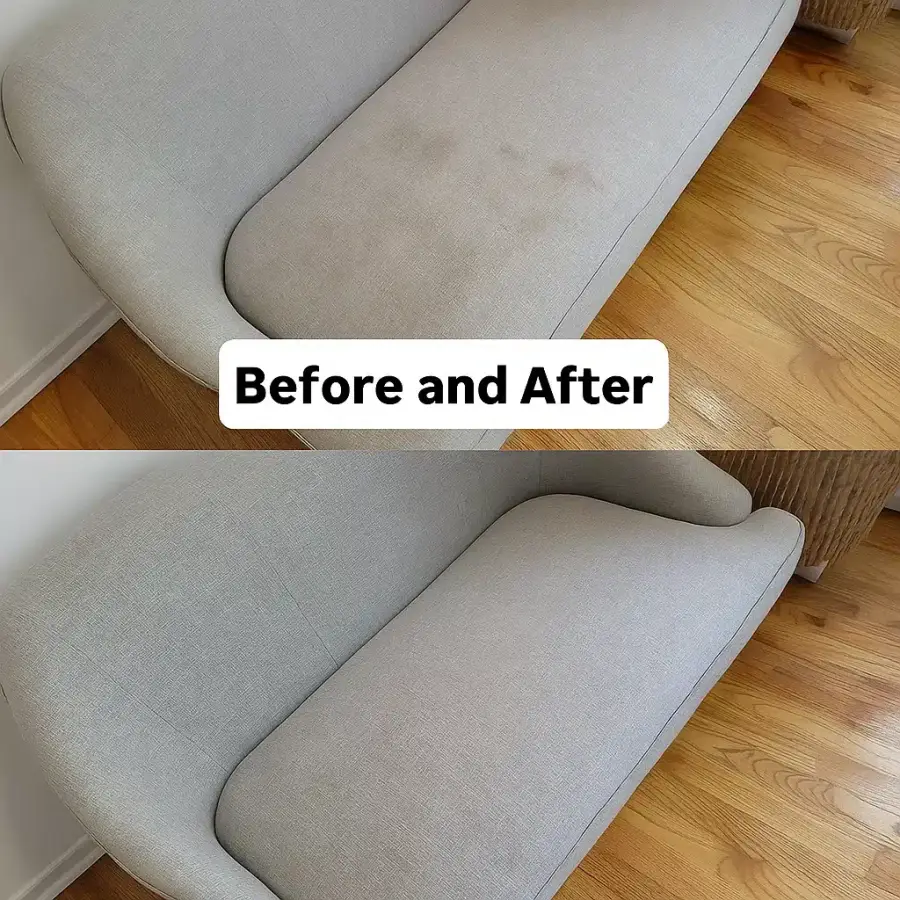
W, S, W/S and X: what your sofa tag is telling you.
That small tag under your sofa cushion decides what can touch the fabric. Here is what each cleaning code means, how to spot test safely, what to do when the tag is gone, and when to let a pro handle it in a small NYC apartment.
Short answer: the cleaning code on your sofa tag tells you what the fabric can safely meet. W means water-based cleaners, S means water-free (solvent) cleaners only, W/S means either one, and X means vacuum only, no liquid at all. Using the wrong kind of cleaner is the most common reason a small spot turns into a big ring. If there is no tag, or you are not sure, test first or let a pro do it. Book before 2 PM for same-day service, with a free quote and $20 off when you book online.
If you already know you want help, our page on fabric upholstery cleaning in NYC explains how a visit works. This guide is for the moment before that: a spill on the couch, a spray bottle in your hand, and a small tag with one or two letters.
Where to find the cleaning code
Most sofas and armchairs have a small fabric or paper tag with care information. The code is usually one letter or two letters with a slash. Look in these places first:
- Under the seat cushions, on the deck fabric of the sofa frame.
- On the cushion itself, often next to the zipper.
- Under the sofa, on the dust cover or a sewn-in label.
- In the paperwork or the product page, if the sofa was bought online. Many stores list the code under “care” or “fabric details”.
What W, S, W/S and X mean
The letters are set by the furniture maker for that fabric and its finish. The wording below follows what furniture makers and stores publish, for example the fabric care guide from Klaussner and the cleaning-code guide from Living Spaces.
- W: water-based cleaner. The fabric can be spot cleaned with a water-based upholstery cleaner. This is the easiest code to live with.
- S: solvent only. Spot clean with a mild water-free solvent or dry cleaning product. Avoid anything with water in it. Use it only in a well-ventilated room.
- W/S (also written WS or SW): either one. A mild solvent, an upholstery shampoo or the foam of a mild detergent can be used. Living Spaces still suggests a professional for this code, and both guides say to test a small hidden area first.
- X: vacuum only. No cleaning liquid of any kind. Any solution can cause permanent damage, so brushing and vacuuming are the only home care.
Simple rule: whatever the code, every maker says the same thing first: test in a hidden spot before you clean where it shows.
Each code at a glance
| Code | OK at home | Avoid | When to call a pro |
|---|---|---|---|
| W | Water-based upholstery cleaner, blotting with a damp white cloth | Soaking the cushion, rubbing hard | Large stains, pet accidents, the whole sofa looks dull |
| S | Small amounts of a water-free solvent, in a ventilated room | Water, sprays with water in them, steamers | Any spot bigger than a coin, or rings already there |
| W/S | Mild solvent, upholstery shampoo or the foam of a mild detergent | Mixing products, heavy wetting | Most full cleanings, because the fabric needs a careful choice |
| X | Vacuum and soft brush only | Any liquid at all | Anything more than dust, so the right method is chosen |
| No tag | Vacuum, blot spills dry | Guessing with sprays | Before any wet cleaning |
Why the wrong cleaner leaves a ring
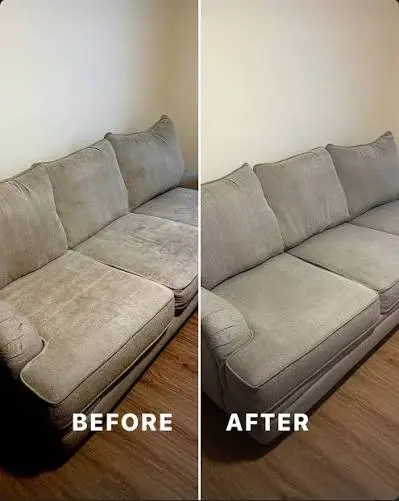
A ring is rarely the original stain. It usually forms because liquid spreads out in the fabric and the dirt travels with it to the edge of the wet area. When that edge dries, the dirt stays there as a line. On fabrics coded S, water itself can leave that line, even if the spill was only water.
Other problems we see on sofas after a home attempt:
- Color bleeding on patterned or dark fabric, when a product is too strong or too wet.
- A stiff or crunchy patch, because soap stayed in the fabric and was never rinsed.
- A lighter spot, from scrubbing that roughed up the surface or from a product with bleach in it.
- A spot that comes back after a few days, because the stain soaked into the foam and wicked back up as it dried.
Once a ring or a light patch is there, more spray rarely fixes it. It needs the whole panel cleaned evenly, which is what professional upholstery cleaning is for.
No tag? Online, flat-pack and hand-me-down sofas
In New York, a lot of furniture has no tag left. The sofa came in boxes and went up four flights of a walk-up. The label was cut off because it was itchy. The armchair came from a family member or from a building’s moving sale.
In that case, treat the fabric as unknown. Vacuum it, blot fresh spills with a dry white cloth, and do not use any spray until someone has tested it. If you bought the sofa online, it is worth checking the store’s product page or your order email. The code is often there even when the tag is gone.
Why spots spread faster in NYC apartments
Small apartments are hard on furniture. The sofa is often the dining table, the desk and the guest bed. Kids, pets and takeout all meet on the same three cushions. That means more spills, and more quick fixes with whatever is under the sink.
Winter adds its own problem. With radiators running and windows shut, a damp patch on a sofa next to the heat dries very fast, and fast drying at the edge is exactly how rings form. If you also have leather pieces in a heated room, our post on leather furniture in dry, heated apartments covers that side.
Not sure what your sofa can take? Send us the code from the tag, or tell us there is none. Book before 2 PM for same-day service. Free quote, no hidden fees, and $20 off when you book online.
How to test a cleaner safely at home
If your code is W or W/S and you want to try a small spot yourself, test first. It takes ten minutes and can save the whole cushion.
Pick a hidden spot
The back of a cushion, the skirt on the back side, or fabric under the sofa. Not the front of the seat.
Use very little
Put a small amount of the product on a white cloth, not straight on the fabric.
Blot and wait
Press for a few seconds, then let it dry fully. Check for color on the cloth, a ring, a lighter area or a stiff feel.
Then treat the spot
Blot from the outside in, never rub, and stop as soon as the stain stops moving to the cloth.
On S and X fabrics we suggest you stop at blotting and vacuuming. For cushions on dining chairs and benches, which get the most food spills, our guide to dining chair and seat cushion cleaning goes further.
4 mistakes to avoid
How our crews choose the method
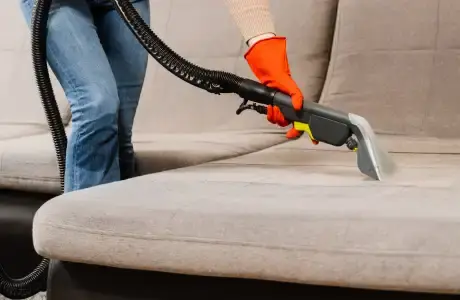
When we arrive, the first job is not cleaning. We read the tag if there is one, look at the fabric and the cushions, and test in a hidden spot. That tells us if the fabric can take a water-based clean with a careful rinse, or if it needs a low-moisture or solvent approach. It also shows if any color might move.
Then we pre-treat the spots, clean each panel evenly so there are no edges left to dry into rings, and pull out as much moisture as we can. Our products are eco-safe and non-toxic, safe for kids and pets. For everyday family sofas, see our couch cleaning page. Microfiber needs its own approach, covered on our microfiber upholstery cleaning page and in our post on cleaning microfiber couches. Leather is not coded the same way at all, so it goes to leather furniture cleaning. Loose seat pads and dining chairs are part of our seat cushion cleaning.
What to tell us when you book
- The cleaning code from the tag, or a photo of the tag. If there is none, just say so.
- What the stain is and how old it is, if you know.
- What has already been used on it at home. This changes how we treat it.
- Pets, small kids or anyone sensitive to smells.
Where our crews work
We are NYC carpet cleaners who clean sofas and chairs too, often in the same visit. In Manhattan our crews work in Gramercy Park pre-war apartments and Tribeca lofts. In Brooklyn they work in Cobble Hill brownstones and Bay Ridge homes. In Queens they cover Kew Gardens and Sunnyside.
Let us read the tag for you: we test first, choose the right method for W, S, W/S or no-tag fabric, and leave the sofa clean and even. Book before 2 PM for same-day service. Free quote, no hidden fees, and $20 off when you book online.
Every sofa visit includes
- Free quote before we come
- Tag and fabric check
- Hidden-spot test first
- Pre-treatment for spots
- Even cleaning, no rings
- Eco-safe, non-toxic products
Sofa and chair cleaning
Fabric sofas, sectionals, armchairs and dining chairs, cleaned with the right method for the code. Free quote, no hidden fees.
Sofa cleaning code questions
What does the W cleaning code on a sofa mean?
W means the fabric can be spot cleaned with a water-based upholstery cleaner. Use a little on a white cloth, blot instead of rubbing, and test in a hidden spot first.
Can I use water on an S-code sofa?
No. S means water-free solvent cleaners only. Water can leave rings on these fabrics, so blot spills dry and call a pro for anything bigger than a small spot.
What does X mean on upholstery?
X means vacuum and brush only. No cleaning liquid of any kind should be used at home, because it can cause permanent damage.
My sofa has no tag. What should I do?
Check the store product page or order email first, since the code is often listed there. If you still do not know, treat the fabric as unknown: vacuum, blot spills dry and let a professional test it before any wet cleaning.
- Organic carpet cleaning in NYC: what kid- and pet-safe meansLabel words, residue and drying in closed winter apartments.
- Dining chairs and seat cushionsWhat professional cleaning does for the most-used seats.
- Leather furniture in dry, heated apartmentsWinter heat and how to keep leather from cracking.
- Carpet traffic lanes in NYC: why they turn grayDirt, wear and leftover residue in apartment carpet.
More on the blog, or see our carpet cleaning FAQs.